When you start looking for the best forex trading platforms South Africa has to offer, one factor stands above all others: FSCA regulation. Seriously, choosing a broker regulated by our own Financial Sector Conduct Authority (FSCA) is the single most important step you can take to protect your money. It's the bedrock of a secure trading environment.
How to Choose the Right Forex Platform in South Africa
With so many brokers vying for your attention, finding a safe and reliable forex platform in South Africa can feel like a mission. This guide is here to help you cut through that noise. If you're completely new to this world, getting a handle on the basics of how to start investing for beginners provides a great foundation before you jump into the fast-paced world of forex.
Our goal is simple: to give you a solid framework for picking a platform that fits your trading style and keeps your funds safe. We’ll be zeroing in on the criteria that really matter for South African traders:
- FSCA Regulation: This is non-negotiable. It's your primary defence.
- Trading Costs: We're talking spreads, commissions, and any other sneaky fees that can eat into your profits.
- ZAR Accounts: Having one is crucial. It helps you dodge costly and unnecessary currency conversion fees on every deposit and withdrawal.
- Platform Technology: Is the platform stable? Does it offer the tools you need, whether it's the popular MT4, MT5, or a custom-built interface?
- Customer Support: When things go wrong, you need quick, responsive, and preferably local support that understands your context.
The Importance of FSCA Regulation
The Financial Sector Conduct Authority (FSCA) is the official market conduct regulator for all financial institutions in South Africa. Its job is to make sure brokers play by the rules—rules designed to ensure transparency, fairness, and the protection of your money. As forex trading has boomed here, the FSCA has really stepped up, creating a secure environment for traders.
Let me be clear: choosing an FSCA-regulated broker isn't just a good idea, it's essential for trading safely in South Africa. This regulation guarantees your funds are kept separate from the broker's own money and ensures the company operates under our laws.
The FSCA website is your best friend for due diligence. It's the official source for checking if a broker is legitimate.
On this portal, you can search for any financial service provider by name or FSP number to confirm their licence is current and valid. It’s a simple check that can save you a world of trouble.
What's Fuelling the Forex Boom in South Africa?
The explosion in popularity of forex trading platforms in South Africa isn't happening in a vacuum. It's a direct result of the country's unique economic realities. More and more South Africans are on the lookout for ways to earn extra income, and forex trading offers a tangible, accessible way to do that.
This trend is powered by a perfect storm of economic pressure and incredible technological leaps. With job security not what it used to be, the prospect of making money from global currency markets is catching on fast. The fact that you can get started with a relatively small amount of capital opens the door for just about anyone.
Technology and Accessibility Have Changed Everything
Let's be clear: technology has completely rewritten the rules of trading. The days of forex being a closed club for big banks are long gone. Now, anyone with a smartphone can download an app and be ready to trade in minutes.
This shift has bulldozed the old barriers to entry. Modern platforms are built to be easy to use, packed with learning materials, and offer practice (demo) accounts. This focus on making trading less intimidating gives newcomers the confidence to get their feet wet, which only adds more fuel to the market's growth.
The real game-changer has been accessibility. With low minimum deposits and mobile-first platforms, forex trading has shifted from a niche financial activity to a mainstream side hustle for thousands of South Africans looking for financial independence.
A Market Driven by Everyday People
One of the most significant shifts we're seeing is the massive growth in the retail forex market. Despite economic headwinds, local brokers consistently report record numbers of new accounts being opened every single month.
The low barrier to entry is a huge factor. With minimum deposits often as low as R200, forex has become an incredibly popular side hustle. This has pushed retail trading volumes up by an estimated 18% year-on-year, a figure tracked through local deposit flows to FSCA-licensed platforms. You can dig deeper into this local market boom by reading more on NewZimbabwe.com.
Understanding this explosive growth gives you crucial context. With a flood of new traders entering the scene, the need for a trustworthy, secure, and properly regulated platform is more critical than ever. Picking the right partner isn't just a small detail—it's the first and most important step to navigating this exciting but competitive world safely.
Comparing Top Forex Platforms for South African Traders
Trying to choose between the sheer number of forex trading platforms South Africa has on offer can feel overwhelming. It’s easy to get drawn in by a slick-looking website or a promise of ultra-low spreads, but those things rarely tell the whole story. To make a smart choice, we need to get under the bonnet and look at what really matters for your bottom line and your peace of mind.
This means moving past the marketing hype and really analysing how a platform will perform for a trader based right here in South Africa. We’ll be zeroing in on things like proper FSCA regulation, what you’ll actually pay to trade, how stable the software is, and the crucial option of having a ZAR-based account. Each one of these elements is a deal-breaker in its own right.
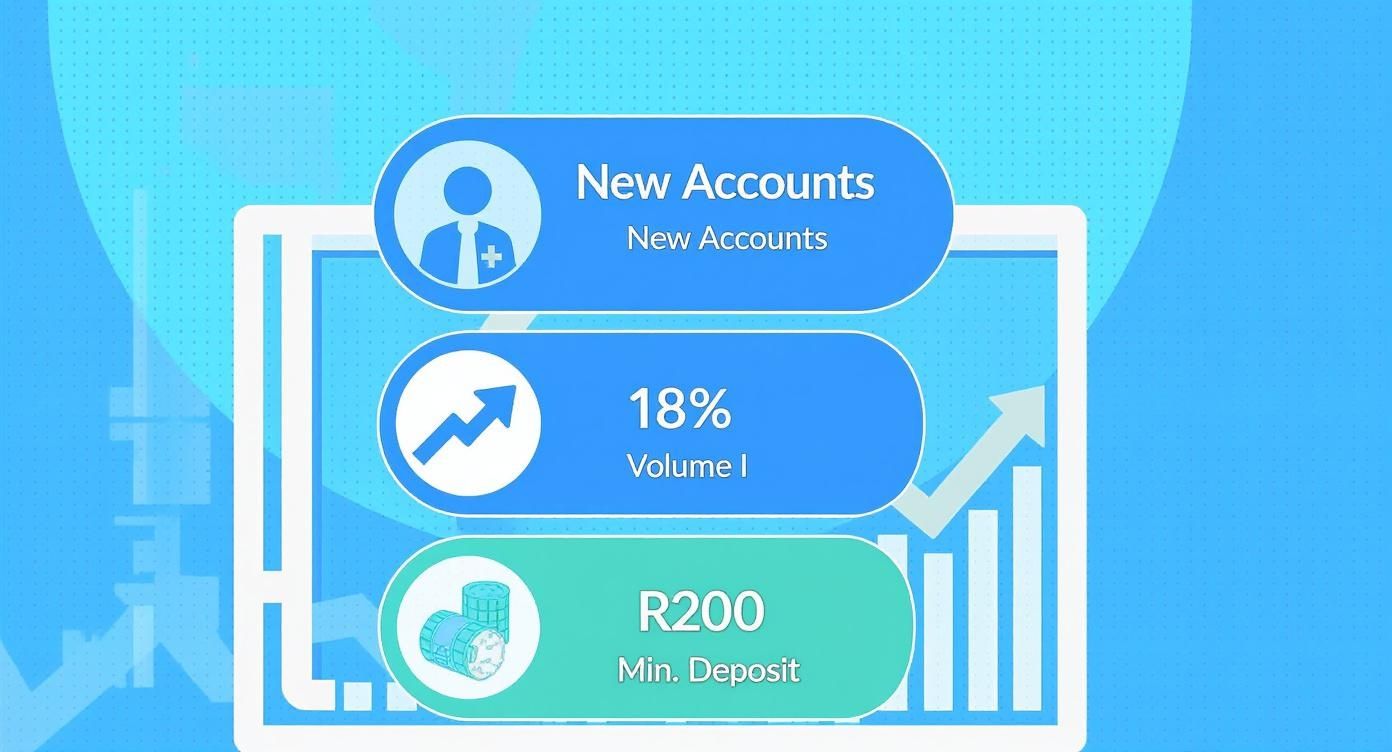
As you can see, the market here is growing fast. There's been an 18% jump in trading volume recently, largely because it's become so much easier for people to get started with minimum deposits as low as R200. This boom makes it even more important to pick your platform carefully.
At-a-Glance Comparison of Leading South African Forex Platforms
To give you a clearer picture, this table breaks down some of the top FSCA-regulated brokers. We've focused on the features that matter most to local traders, like costs, account options, and the technology you'll be using every day.
| Platform Name | FSCA Regulated | Typical EUR/USD Spread | ZAR Accounts Offered | Available Trading Platforms |
|---|---|---|---|---|
| Tickmill | Yes | 0.2 pips | Yes | MT4, MT5, Tickmill App |
| Exness | Yes | 0.6 pips | Yes | MT4, MT5, Exness Terminal |
| HF Markets | Yes | 1.2 pips | Yes | MT4, MT5, HFM App |
| FXCM | Yes | 1.3 pips | Yes | Trading Station, MT4 |
This is just a starting point, of course, but it immediately highlights key differences in cost and platform availability that can help you narrow down your options.
FSCA Regulation and Fund Security
First things first: is the broker licensed by the FSCA? This is non-negotiable. An FSCA licence is your primary safety net. It legally obligates a broker to keep your trading funds separate from their own company money in what’s called a segregated account.
This means your capital is held safely with a major South African bank, completely ring-fenced from the broker’s business operations. If the broker ever ran into financial trouble, your money wouldn't be at risk. Always look for a broker’s FSP (Financial Service Provider) number on their website and double-check it on the official FSCA search portal.
Analysing True Trading Costs
The cost you see advertised most often is the spread—that tiny difference between the buy and sell price. But that's just one piece of the puzzle. To understand the true cost, you need to factor in commissions, overnight fees, and any charges for moving your money in and out.
- Spreads and Commissions: Some accounts have no commission but slightly wider spreads. Others boast raw, near-zero spreads but charge a set commission for every trade you make. If you’re a high-frequency trader, that commission-based model will almost always work out cheaper. For someone placing fewer, longer-term trades, a simple spread-only account might be better.
- Overnight (Swap) Fees: If you hold a trade open past the market close, you'll either pay or earn a small fee called a swap. It’s based on the interest rate difference between the two currencies you’re trading. For swing or position traders holding on for days or weeks, these swap fees can quietly add up and take a real bite out of your profits.
- ZAR Account Availability: This is a huge, often overlooked, cost-saver. If your platform doesn't let you hold your account in Rands, you're forced to convert your money to USD or EUR every time you deposit and then back to ZAR when you withdraw. You get hit by the bank's exchange rate spread on both ends, which slowly bleeds your capital before you've even placed a single trade.
A trader making monthly deposits of R10,000 could lose hundreds of Rands to conversion fees alone over a year on a non-ZAR platform. Choosing a broker with ZAR accounts eliminates this unnecessary cost entirely, ensuring more of your money goes towards your actual trading.
Platform Technology: MT4, MT5, or Proprietary
The trading platform is your cockpit; it's where everything happens. Most brokers offer the workhorses of the industry: MetaTrader 4 (MT4) or its successor, MetaTrader 5 (MT5). They’re famous for their powerful charting, huge library of custom indicators, and the ability to run automated trading strategies called Expert Advisors (EAs).
On the other hand, some brokers build their own proprietary platforms from the ground up. These often come with a cleaner, more intuitive design and might include built-in educational resources or unique risk management features. The right choice really comes down to you. An experienced trader who has a favourite set of EAs will probably stick with MT4 or MT5. A newcomer who wants a less intimidating, more guided experience might find a proprietary platform is a much better fit.
Matching a Platform to Your Trading Style
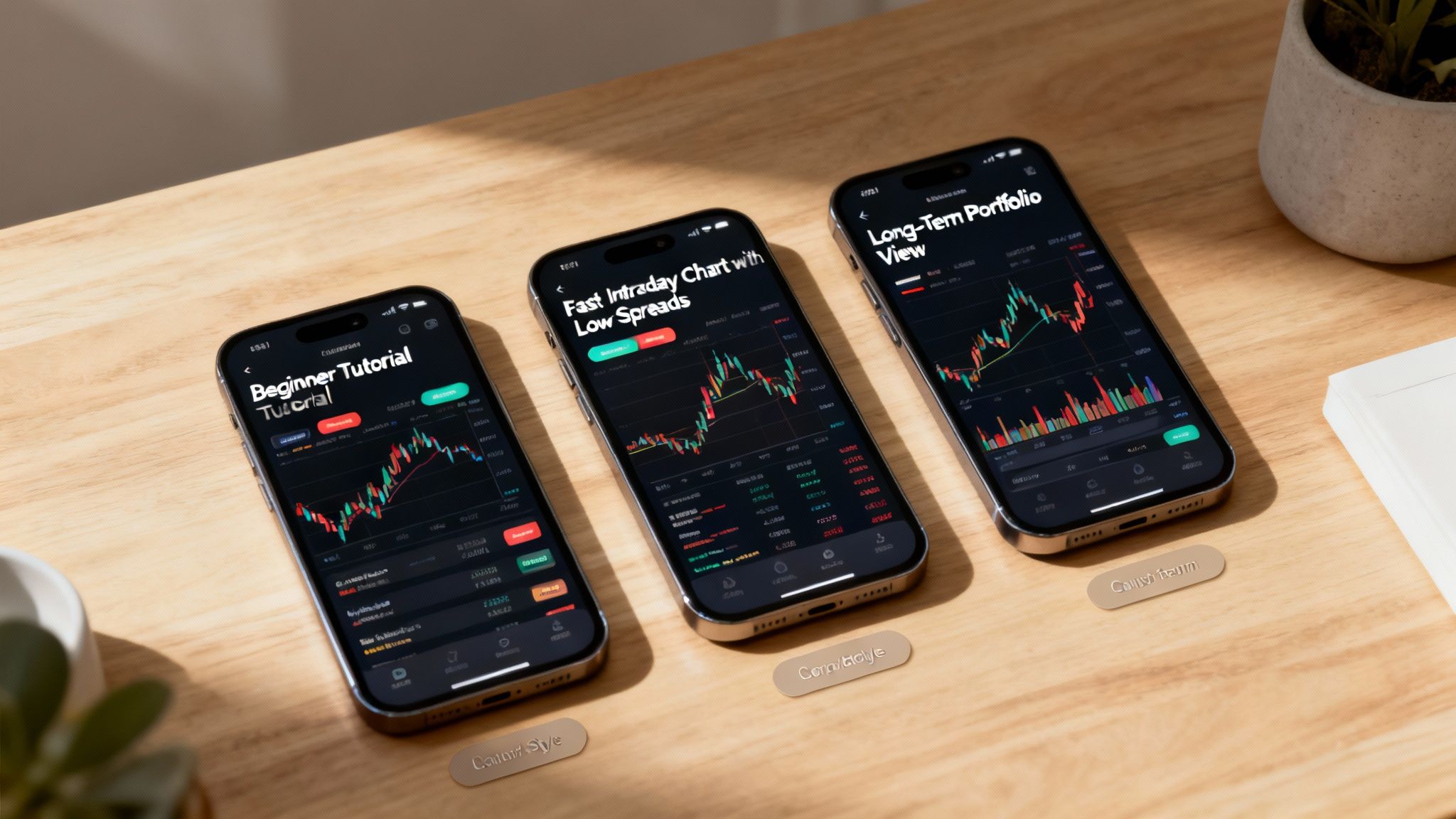
When you're looking at the top forex trading platforms South Africa has to offer, the real question isn't "which one is the best?" It's "which one is the best for me?" The platform that's a perfect fit for a high-frequency scalper could be a complete disaster for a long-term position trader. The key to success is aligning a platform’s strengths with your personal trading approach.
The South African forex scene is buzzing with activity, turning over an impressive $2.21 billion in daily volumes with roughly 190,000 daily traders. A huge driver of this growth is the younger generation; traders between 18 and 25 have increased their activity by a staggering 450% in just two years. You can dive deeper into these numbers by checking out the latest report on Africa's top trading nations at FNFOREX1.com. This energetic market means platforms have evolved to meet a wide range of needs.
So, the first step is a bit of honest self-reflection. How do you actually trade? Are you in and out of the market dozens of times a day, or do you place just a few thoughtful trades a month? Your answer completely changes what you should be looking for in a platform.
For Beginners Stepping Into the Market
If you’re just starting out, your priorities are simple: education, ease of use, and keeping your risk low. You need a platform that guides you, not one that throws you into the deep end.
Look for these non-negotiables:
- An Intuitive Interface: A clean, uncluttered layout on both desktop and mobile is crucial. A confusing platform is a recipe for costly mistakes.
- Solid Educational Resources: Direct access to webinars, articles, and video tutorials can flatten your learning curve dramatically.
- Low Minimum Deposits: Starting with a small amount, like R200-R500, lets you get a feel for real trading without putting significant capital on the line.
- A Realistic Demo Account: An unlimited demo that accurately reflects live market conditions is your most powerful tool for practice.
For a beginner, a supportive ecosystem is far more valuable than rock-bottom spreads. Your initial focus should be on learning the ropes and protecting your capital, not chasing tiny profits on high-volume trades.
For Active Day Traders and Scalpers
When you’re entering and exiting the market multiple times a day, two things matter above all else: speed and cost. Every fraction of a pip counts when your strategy is built on banking small, frequent wins.
A day trader’s success is directly tied to the platform's efficiency. Low latency, one-click trading, and minimal spreads are not just nice-to-haves; they are fundamental requirements for this high-paced style of trading.
Your checklist should be ruthlessly focused on performance:
- Ultra-Low Spreads and Commissions: Look for ECN-style accounts. The combination of raw spreads and a fixed commission almost always works out cheaper for high-volume trading.
- Lightning-Fast Execution: A broker with local servers in South Africa can make a world of difference. It minimises latency and reduces slippage—that frustrating gap between the price you clicked and the price you got.
- Advanced Charting Tools: You need a platform with serious analytical power. Platforms like MT5 or cTrader provide the superior charting packages and Depth of Market (DOM) data that are essential for short-term analysis.
For Swing and Position Traders
If your strategy involves holding trades for days, weeks, or even months, your perspective shifts. You're less concerned with tiny spread costs and more interested in factors that affect long-term positions.
Overnight swap fees—the interest you pay or earn for holding a position open overnight—suddenly become a major factor. A platform with high negative swaps can slowly bleed a profitable long-term trade dry.
You’ll also want a wide range of tradable assets to choose from, allowing you to act on broader market trends beyond just the major currency pairs. A position trader needs a stable, reliable platform with a fee structure that doesn’t penalise you for patience.
How to Make Your Final Platform Choice
Diving into the world of forex trading platforms in South Africa can feel a bit overwhelming at first. By now, though, you should have a solid grasp of what makes each broker tick. The final step isn’t about chasing a single "best" platform—it’s about matching one to your specific business needs. It’s time to pull together everything we’ve covered on regulation, fees, and features to make a confident choice.
With this foundation, you can stop sifting through dozens of options and zero in on the few that truly align with your trading style. The real goal here is to make a well-informed decision that supports your strategy and protects your capital right from the start.
Matching Platforms to Specific Needs
Instead of just handing out a blanket recommendation, it’s far more useful to look at which platforms are the top performers for different kinds of traders. This approach helps you find a broker whose strengths directly map to what you’re trying to achieve.
Here’s a quick breakdown based on common priorities for South African traders:
- For the Lowest Trading Costs: If your main goal is to keep expenses to an absolute minimum, look for brokers offering ECN-style accounts. They provide raw spreads paired with a fixed commission, a setup that almost always works out cheaper for active traders.
- For Beginners: If you're just starting out, you need a platform that won't throw you in at the deep end. The best choice will have a low minimum deposit, a genuinely user-friendly interface on both mobile and desktop, and a library of educational resources you can actually use.
- For Advanced Tools and Automation: For seasoned traders relying on Expert Advisors (EAs) or custom algorithms, the choice is clear: stick with platforms built on MT5 or cTrader. These powerhouses offer the technical depth and reliability needed for complex, automated strategies.
Think of the right platform as a true partner. It shouldn't get in your way. Instead, it should offer the exact tools and cost structure that empower your strategy, whether you're placing one trade a month or a hundred a day.
Your Final Verification Checklist
Before you deposit a single Rand, it’s absolutely essential to run a few final checks yourself. This isn't just about ticking boxes; it's about getting a firsthand feel for the broker's operations and giving yourself complete peace of mind.
Work through these simple steps before funding your account:
- Confirm the FSCA Licence Yourself: Don't just take the broker's word for it. Head over to the official FSCA website and use their public search function. Pop in the broker’s name or FSP number to verify their licence status directly.
- Test Their Customer Support: This is a simple but telling test. Send an email or open a live chat with a specific, slightly technical question. How long does a response take? Is the answer clear and genuinely helpful? Their answer will tell you a lot about their service quality.
- Analyse the Demo Account: Spend some real time on their demo platform. Is it stable? Do the spreads and execution speeds feel like what they’ve advertised for their live accounts? Use this trial period to make sure the software actually works for you.
Going through this checklist turns your decision from something theoretical into something practical. It confirms the broker doesn’t just look good on paper but actually delivers where it counts.
Your Top Questions About Forex Trading in SA Answered
If you're just getting into forex trading in South Africa, you've probably got a few questions. It’s completely normal. Let's tackle some of the most common queries about regulations, money, and keeping your funds safe to get you started on the right foot.
Is Forex Trading Actually Legal Here?
Yes, absolutely. Forex trading in South Africa is 100% legal and is regulated by the Financial Sector Conduct Authority (FSCA). When you trade with a broker licensed by the FSCA, your money is kept in separate accounts, which is a crucial safety net.
Before you sign up with anyone, always double-check their FSP number on the official FSCA website. It’s a simple step that confirms their licence is legitimate and active.
This single check protects you from dodgy operators and ensures you're trading within a secure, regulated framework.
How Much Do I Need to Start Trading?
What’s the real minimum deposit to get going? Most brokers catering to South Africans have set the bar quite low, usually somewhere between R100 and R200. While this makes it easy to get started, remember that trading with such a small amount of capital is inherently risky.
| Deposit Amount | What You Typically Get |
|---|---|
| R100 | Basic platform access, often limited to a demo account. |
| R200 | Live trading enabled, with access to standard tools. |
| R500+ | Unlocks more advanced features and often better spreads. |
Think of your initial deposit as the key that unlocks different levels of the platform. It's smart to start with an amount that you're comfortable with, balancing the need to learn with the risk involved.
Can I Use Rands to Fund My Account?
Of course. The best forex trading platforms for South Africans will let you run your account in ZAR. This is a huge advantage because you can deposit, trade, and withdraw in Rands, completely sidestepping those pesky and expensive currency conversion fees.
Sticking to a ZAR-based account can genuinely save you hundreds, if not thousands, in conversion fees over a year. That’s more of your profit that stays in your pocket.
When your account is in Rands, what you see is what you get—no hidden markups or confusing conversion rates eating into your returns.
How Do I Get My Profits Out?
Getting your money out is just as important as putting it in. FSCA-regulated brokers make this straightforward and offer several reliable options:
- Local bank transfers (EFT)
- Credit or debit cards
- Popular e-wallets
You'll typically request a withdrawal through your client dashboard, and the money usually lands in your account within 1 to 5 business days. Just be sure to check if your broker charges any withdrawal fees before you hit the button.
Knowing the withdrawal process inside and out helps you manage your cash flow and avoids any nasty surprises when you want to access your earnings.
A Few Expert Tips for Newcomers
- Start with a demo account. Seriously. Get a feel for the platform, test your strategies, and understand how the market moves without putting a single Rand at risk.
- Keep a close eye on your margin level. This is critical for avoiding a margin call, which can wipe out your account. Understand how leverage amplifies both your potential profits and your losses.
- Read the fine print on fund protection. Every regulated broker should have a clear policy on how they segregate and protect client funds. Make sure you know how your money is being kept safe.
Hopefully, these answers give you a solid foundation to start navigating the world of forex trading platforms in South Africa. Keep this guide handy and refer back to it whenever you're thinking about opening or funding an account.
Trade smart, and good luck.
Ready to simplify cross-border payments? Experience transparent, zero-spread FX transfers with Zaro today.