Getting your forex account up and running in South Africa is pretty straightforward. It boils down to picking a broker regulated by the Financial Sector Conduct Authority (FSCA), getting your ID and proof of residence documents ready, filling out an online form, and then funding the account. The whole system is built to be secure and is open to anyone with an internet connection.
Why Forex Trading Is Exploding in South Africa
Before we jump into the how, it’s worth understanding why so many South Africans are flocking to the currency markets. The local forex scene isn't just a passing trend; it's a financial sector that's ballooning, driven by economic and social factors that are unique to our country.
The biggest draw is just how liquid and accessible the market is. Unlike kicking off a traditional investment portfolio, you don’t need a mountain of cash to start trading forex. This opens the door for a much wider range of people who are looking for new financial opportunities, creating a really vibrant local trading community.
This infographic breaks down the key drivers behind South Africa's growing forex market and the demographic shifts shaping its future.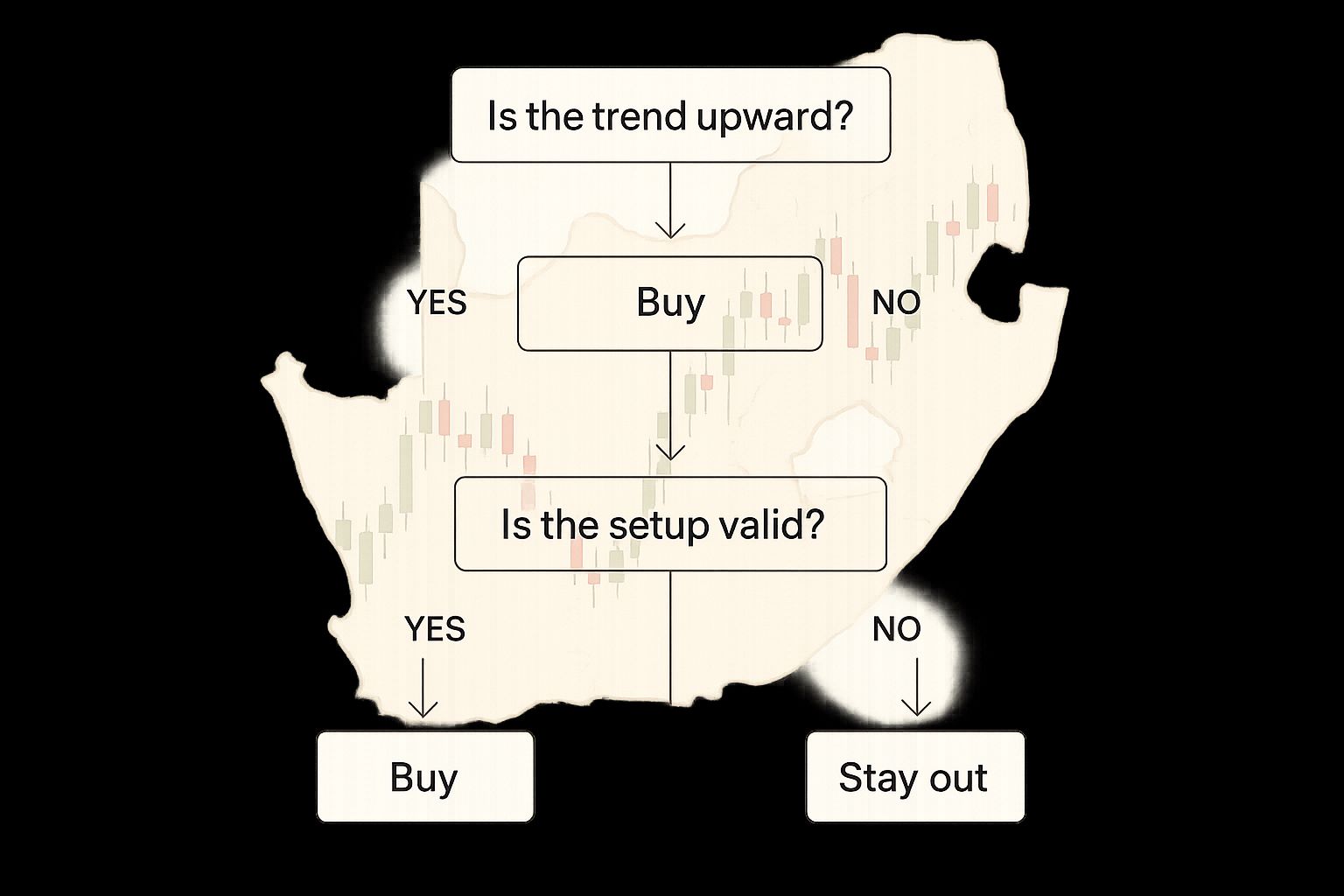
As you can see, solid regulatory oversight mixed with a huge wave of interest from a younger, tech-savvy generation is really what’s fuelling this expansion.
A Market Built on Growth and Regulation
One of the most important things giving new traders confidence is the strong regulatory framework we have here. The Financial Sector Conduct Authority (FSCA) keeps a close watch, making sure brokers play fair and are transparent. This oversight protects traders’ funds and fosters a much safer trading environment than you’d find in unregulated markets.
For a lot of people thinking about trading, knowing a local authority is watching over the brokers is the final nudge they need. It changes forex from what might feel like a gamble into a properly regulated financial activity.
This regulated environment has paved the way for massive growth. South Africa is now the biggest forex trading hub on the continent, with daily turnover topping $20 billion. A huge slice of this growth is coming from younger people; trading among those aged 18-25 has shot up by an incredible 450% in just two years. You can learn more about these powerful trends shaping the future of African forex trading.
The Pull of Community and Opportunity
It’s not just about the numbers, though. There's a real sense of community that's pulling people in. Online forums, social media groups, and local workshops are buzzing with South Africans sharing strategies, tips, and encouragement. This collaborative vibe makes the whole process feel a lot less intimidating for anyone just starting out.
When you put it all together, it’s a powerful combination:
- Strong Regulation: The FSCA offers a safety net and builds trust.
- High Accessibility: Low barriers to entry mean you don't need to be wealthy to start.
- Thriving Community: A network of peers provides support and shared knowledge.
- Economic Opportunity: The natural volatility of the Rand (ZAR) creates unique trading possibilities.
Getting your head around this landscape is the perfect first step on your trading journey. It gives you the context you need before you go out and choose a broker to open an account with.
Choosing the Right FSCA-Regulated Broker
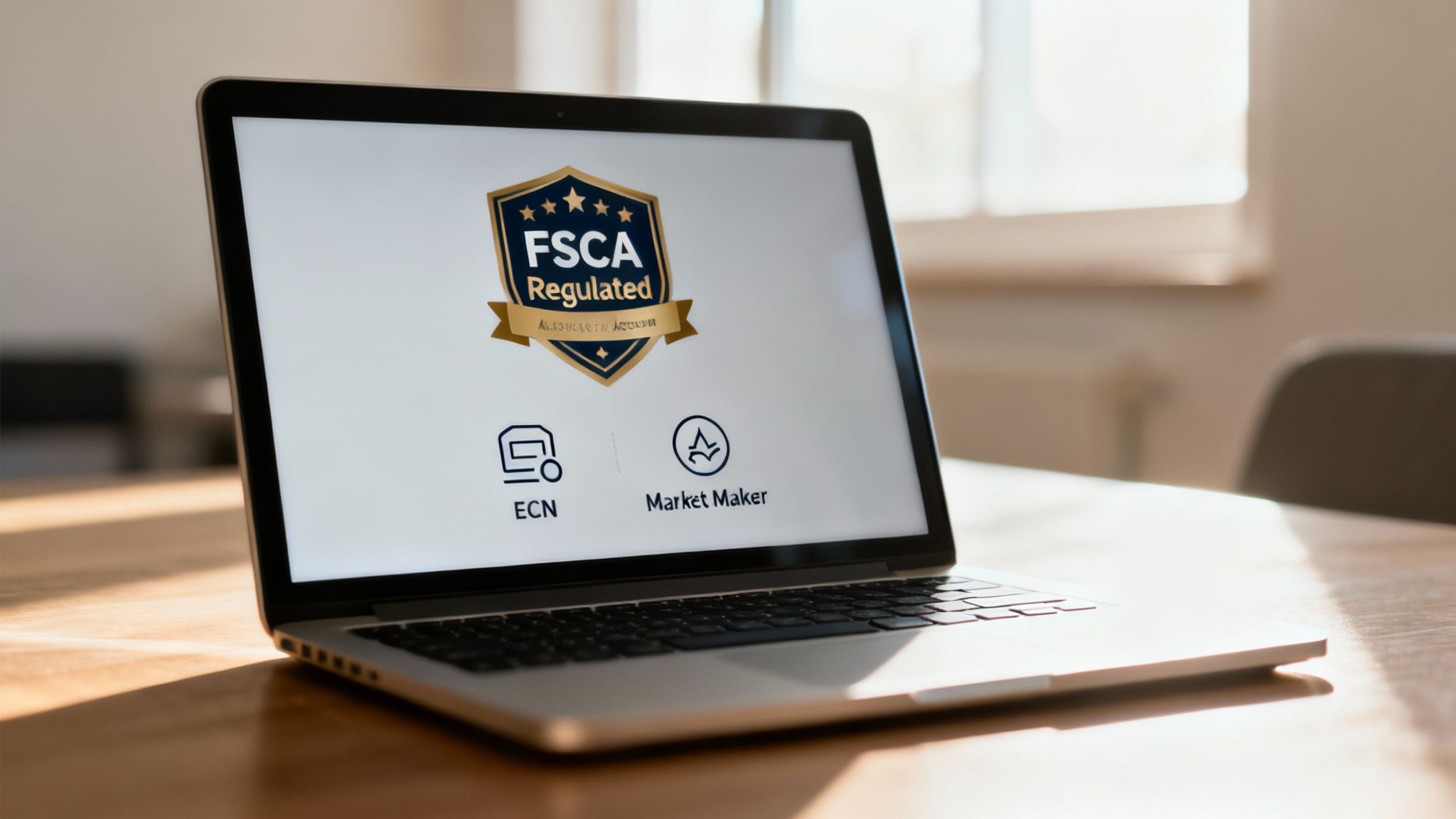
Alright, let's talk about the single most important decision you'll make: choosing your broker. Think of this less like picking a piece of software and more like finding a business partner. Your entire trading operation hinges on this choice, so it pays to be meticulous.
The absolute, non-negotiable starting point for any South African business is regulation.
If a broker isn't licensed by the Financial Sector Conduct Authority (FSCA), they shouldn't even be on your radar. Full stop. This isn't just good advice; it's your primary defence against dodgy operators and potential loss of capital. FSCA oversight means the broker has to meet strict standards, including the crucial practice of keeping client funds in segregated accounts. In simple terms, your money is kept separate from theirs, so it's protected if the broker ever runs into financial trouble.
Thankfully, South Africa’s forex market is well-regulated, giving us access to some genuinely secure and reputable platforms. This strong framework, combined with the inherent volatility of the South African Rand (ZAR), creates a really dynamic trading environment. For a deeper dive, you can explore detailed data on ZAR currency trends and volatility on tradingeconomics.com.
Getting to Grips with Broker Models
Once you've filtered your list down to only FSCA-regulated options, you need to understand how these brokers actually work. Most will fall into a couple of main categories, and knowing the difference is key to finding the right fit for your business.
To help you out, here’s a quick breakdown of the common broker models you'll encounter.
Comparing Broker Types for New Traders
| Broker Type | How They Make Money | Best For | Key Consideration |
|---|---|---|---|
| Market Maker (Dealing Desk) | The "spread" (the difference between the buy and sell price). They create their own market and take the other side of your trades. | Beginners who prefer predictable, fixed spreads and a simpler cost structure. | There can be a potential conflict of interest since their profit is tied to your loss. |
| ECN Broker (No Dealing Desk) | A small commission on each trade. They pass your orders directly to a network of liquidity providers (banks, etc.). | Experienced or high-volume traders who need the tightest possible spreads and transparent pricing. | Costs can be less predictable as spreads are variable, and you'll pay a commission on every trade. |
| STP (Straight Through Processing) | A small markup added to the spread from their liquidity providers. They pass orders directly without a dealing desk. | Traders who want a balance of fast execution and no commissions, but with slightly wider spreads than an ECN. | Spreads are variable and can widen significantly during high market volatility. |
Each model has its place. A Market Maker might offer a more straightforward experience with fixed costs, which is great when you're starting out. On the other hand, an ECN broker gives you direct market access and incredibly tight spreads, which can be a huge advantage for certain strategies, especially if you plan on trading frequently.
Matching an Account Type to Your Goals
Beyond the broker model, you'll also need to pick an account type. Brokers usually have a few different tiers designed for traders with different capital levels and experience. The names might vary, but they generally fall into these categories:
- Standard Account: The jack-of-all-trades account. It’s the most common starting point, offering standard contract sizes and balanced spreads. A solid choice if you're starting with a moderate amount of capital.
- Micro or Cent Account: Perfect for dipping your toes in the water. These accounts let you trade with tiny contract sizes, meaning you're risking pennies while you learn the ropes with real money. It's an invaluable tool for building confidence without a huge financial commitment.
- Professional Account: This is for the seasoned, high-volume trader. You'll often get access to raw, near-zero spreads, but in exchange, you'll pay a commission on each trade and face a much higher minimum deposit.
My best piece of advice? No matter which live account you’re eyeing, always start with the broker’s demo account first. Spend a week or two testing their platform, checking their execution speeds, and seeing how responsive their support team is. This trial run costs nothing but can save you a world of headaches later.
Getting Your Documents Ready for Verification
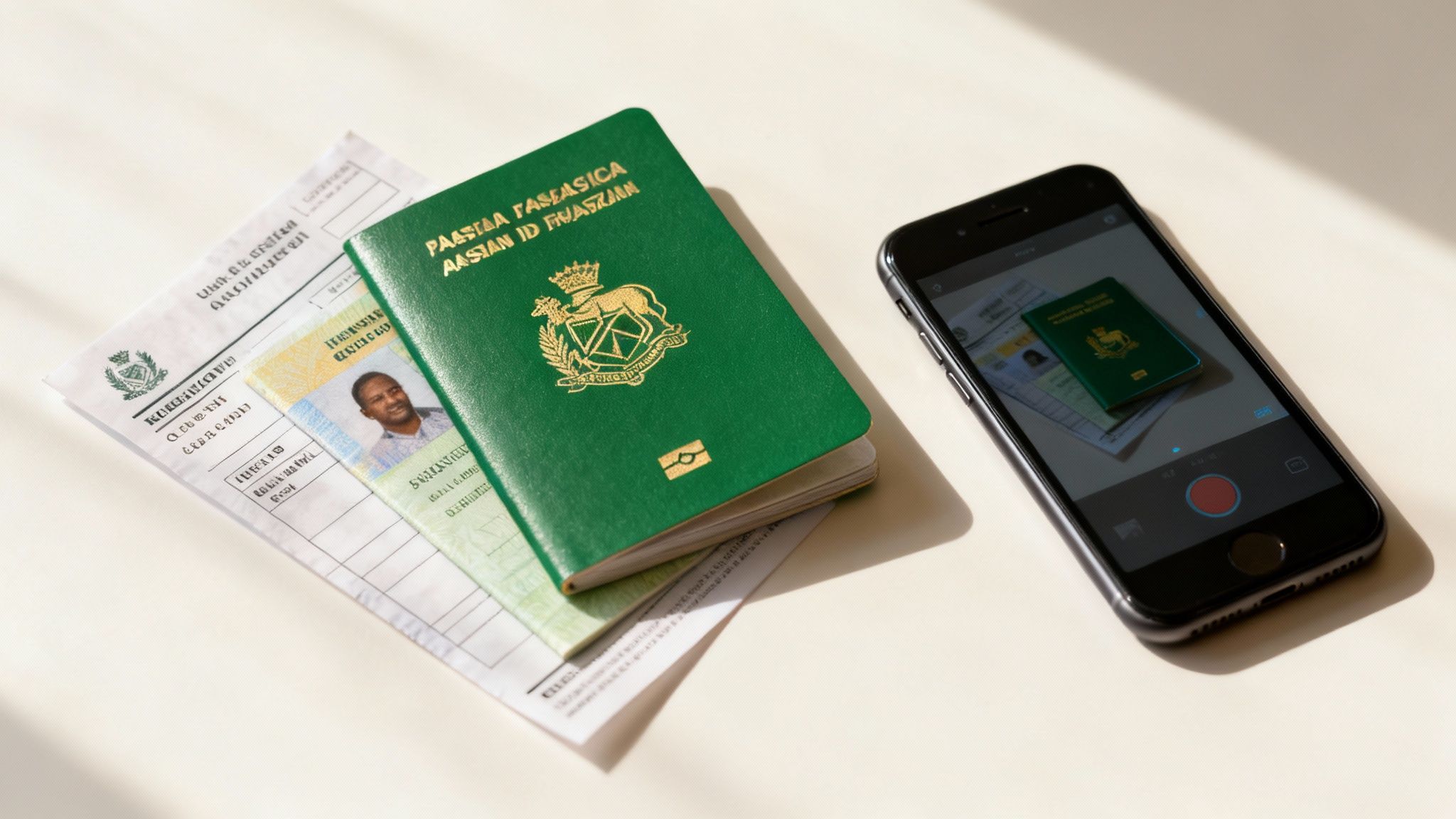
Once you've zeroed in on a few promising FSCA-regulated brokers, it's time to get your paperwork sorted. This step is all about Know Your Customer (KYC), a non-negotiable regulatory process. It might feel like a bit of admin, but it’s there for a good reason—to combat fraud and keep the financial system clean.
Honestly, the smoothest path to getting your account approved is having all your documents lined up and ready to go from the start. I’ve seen countless applications get stuck in limbo, and it's almost always down to a blurry photo or the wrong type of document. A little prep work here saves a ton of frustrating back-and-forth with the support team later.
Proving Your Identity
First, you'll need to provide what's known as Proof of Identity (POI). This is simply a government-issued photo ID that confirms who you are. For those of us in South Africa, the accepted options are pretty standard.
You’ll need to have one of these on hand:
- A valid South African Passport
- Your Green ID Book
- A valid SA ID Card (the new smart card)
- A valid South African Driver’s Licence
A quick tip from experience: clarity is everything. Lay your ID on a flat surface with good lighting and snap a clear picture. Make sure all four corners are visible and there's no glare. A photo where the edges are cropped or the text is unreadable is a guaranteed rejection, and that just wastes your time. For the ID book, you'll need the photo page and the page with your barcode; for the cards, you'll need clear shots of both the front and back.
Confirming Where You Live
Next up is your Proof of Residence (POR). This document verifies your physical address and, crucially, it must be recent. Most brokers will only accept documents issued within the last three months.
I can't stress this enough: the most common snag is submitting a document that's too old or where the name and address aren't crystal clear. Before you upload anything, double-check that your full name, residential address, and the issue date are all perfectly legible.
Here’s what usually works:
- A recent utility bill (water, electricity, etc.)
- A bank statement from a registered South African bank
- A recent tax invoice from SARS
- A signed lease or rental agreement
The details are what matter. The name and address on this document must be an exact match to what you entered in your application. A simple discrepancy, like writing "St" on the form but having "Street" on the bill, can be enough to get your application flagged. Consistency is the secret for anyone wondering how they can open a forex account without hitting unnecessary roadblocks.
Getting Through the Account Opening Process
You’ve got your documents lined up, which means you’re ready for the most direct part of this whole journey. This is your first real interaction with the broker's online platform—the application form that stands between you and a live trading account. It might look like just another set of boxes to fill in, but every single field matters for getting your account set up properly from the start.
The good news is, brokers have made this process incredibly straightforward. You'll enter your personal details: full name, address, ID number. The trick here is to make sure every detail perfectly matches the documents you just spent time gathering. I've seen countless applications delayed because of a simple typo or a slight mismatch, so it really pays to be meticulous and double-check every entry before moving on.
The Financial Questionnaire: Don't Sweat It
After the personal info, the form gets a little more personal. You'll hit a section that feels a bit like an interview, where the broker asks about your financial background and trading experience. This is a regulatory requirement from the Financial Sector Conduct Authority (FSCA), so don't be put off by it; it’s a standard compliance step for every legitimate broker.
Just be honest. The questions are usually quite standard:
- Your employment status and where your funds come from.
- A rough idea of your annual income and net worth.
- Whether you've ever traded derivatives or other financial products before.
- Your grasp of core concepts, especially leverage.
This isn't about judging your finances. It's about a broker's duty to ensure the products they offer are actually suitable for you. If you're completely new to trading, saying so is absolutely fine. In fact, it often helps them point you towards educational resources or account types specifically designed for beginners.
Setting Up Your Trading Account
Next up, you’ll make a few key decisions that will define how your account actually works. This part is crucial because it directly shapes your trading conditions. First, you’ll need to choose your account's base currency. For traders in South Africa, selecting ZAR is almost always the smart move. It can save you a lot in currency conversion fees when you deposit and withdraw your funds.
The other big decision is your leverage level, which you'll see presented as a ratio, like 1:100 or 1:500. Leverage is a powerful tool that lets you control a much larger market position with a smaller amount of capital, but it’s a double-edged sword—it magnifies both your potential profits and your potential losses.
A bit of hard-won advice: if you're just starting out, stick with lower leverage. The temptation of high leverage is real, but it dramatically cranks up your risk. You can almost always request a change to this setting later on, once you're more confident in your strategy and have a feel for the market's rhythm.
Once you’ve made your choices and hit submit, your application is officially in the queue for verification. This usually takes anywhere from a few hours to a couple of business days. The broker’s compliance team will now comb through your application and documents to check that everything is in order.
Don't panic if you get an email saying a document was rejected. It happens all the time—maybe a photo was blurry or a proof of address was out of date. The email will explain exactly what's needed. Just fix the issue and resubmit it. If you’re not sure what they mean, contact their support team. A quick, polite message often gets your query sorted out much faster, moving you one step closer to getting that account approved and funded.
Funding Your Account and Getting Ready to Trade
Alright, you've made it through the paperwork and your account is officially verified. This is the exciting part—moving from theory to practice by funding your account and getting set to place your first trade. It’s a huge milestone, but hold that excitement for just a moment. The decisions you make right now are crucial.
For traders in South Africa, most brokers make it pretty easy to deposit ZAR. You'll generally find options like a good old-fashioned Electronic Funds Transfer (EFT) from your bank, instant card payments, or popular e-wallets. Each has its pros and cons, so it’s less about which is "best" and more about which is best for you.
Choosing Your Funding Method
What's more important to you right now: speed or cost? If you've spotted a setup and want to jump on it, a card payment is your fastest bet, getting the funds in almost instantly. Just be aware that this convenience sometimes comes with a small processing fee.
On the other hand, a local EFT is usually free, but you'll need to be patient as it can take a business day or so to reflect. E-wallets often strike a nice balance between the two.
To make things clearer, here’s a quick look at how the common deposit methods stack up for ZA traders.
Funding Method Comparison for ZA Traders
This table gives you an overview of the most common ways to get money into your forex account, helping you pick the most efficient and cost-effective option for your situation.
| Method | Processing Time | Typical Fees | Best Suited For |
|---|---|---|---|
| Local EFT | 1-2 Business Days | Often free, but double-check with your bank. | Traders who plan ahead and want to maximise their capital by avoiding fees. |
| Card Payment | Instant | Can have a small percentage fee, often 1-3%. | Traders needing to fund their account immediately to act on a market opportunity. |
| E-Wallets | Near-Instant | Varies, but can be competitive with card fees. | Anyone who likes to keep their trading money separate from their main bank account for easier management. |
Ultimately, the choice comes down to your personal workflow and urgency. Many seasoned traders use a combination—EFT for larger, planned deposits and a card for quick top-ups.
How Much Should You Really Deposit?
This is a big one. Deciding how much to fund your account with goes far beyond simply meeting the broker’s minimum deposit. Your first deposit is a strategic decision that should be directly linked to your trading plan.
It’s tempting to start with the bare minimum, maybe R1,000, just to test the waters. The problem? An amount that small gives you absolutely no breathing room. One or two small losing trades—which are a normal part of trading—could wipe out a significant portion of your capital, putting you under immense psychological pressure from the get-go.
Instead, think about depositing an amount that lets you trade comfortably small position sizes while having enough of a cushion to handle market swings. Before you make that first trade, reading a definitive guide to risk management in trading is non-negotiable. It’s the best way to learn how to protect your money.
Think of your initial capital as your business’s start-up fund. It's not just for placing trades; it’s the buffer that allows you to learn, make mistakes, and survive long enough to become profitable.
Getting to Grips With Your Trading Platform
Once your deposit hits the account, you're ready to fire up the trading platform. Most brokers will point you towards the industry standards: MetaTrader 4 (MT4) or MetaTrader 5 (MT5). Keep an eye on your inbox for an email from your broker containing your login details and download links.
Getting set up is straightforward:
- Download and Install: Grab the software using the link your broker sent and install it on your computer or phone.
- Log In: Open the platform, find the "File" menu, and select "Login to Trade Account." Carefully enter the account number, password, and server name exactly as they appear in the email.
- Explore the Layout: Just take a moment. Click around. Get familiar with the main windows: the Market Watch (where you see currency pairs), the Navigator (your accounts and indicators), and the charts themselves.
Seriously, don't rush into a live trade. Spend some time on the demo account that’s almost always included. Open a few charts, play with adding indicators, and practise placing different order types. This final bit of prep work makes all the difference, ensuring that when you do enter the market, you’re acting with confidence and control, not fumbling around in confusion.
Got Questions About Opening a Forex Account?
It's one thing to read a step-by-step guide, but it's another to actually put your own money on the line. Even with the best preparation, a few questions are bound to pop up. That’s perfectly normal.
Let's walk through some of the most common things South African traders ask before they get started. Getting these sorted will help you trade with a lot more confidence.
Do I Have to Pay Tax on Forex Profits in South Africa?
This is a big one, and the answer is a clear and simple yes. Any money you make from forex trading is viewed as income by the South African Revenue Service (SARS) and is taxable.
Trying to fly under the radar is a bad idea and can lead to serious penalties later on. From day one, get into the habit of keeping detailed records of every single trade—your wins, your losses, and any broker fees. You’ll thank yourself when tax season rolls around.
You don't need to become a tax expert, but I strongly suggest chatting with a professional. They can give you advice that fits your specific financial situation and make sure you’re staying on the right side of SARS.
What’s a Realistic Minimum Deposit to Start With?
You’ve probably seen ads from brokers boasting incredibly low minimum deposits, some as low as R100 (about $5). While you can technically open an account with that amount, it’s not a practical way to start trading seriously.
Think of it this way: with such a small balance, you have zero wiggle room. A single losing trade—which is an inevitable part of trading—could wipe out your entire account. A much more sensible starting point for someone who wants to actually learn and manage risk properly is somewhere between R2,000 and R5,000. This gives you a decent buffer, allowing you to use smaller position sizes so that one bad trade doesn't end your career before it begins.
How Can I Be Sure My Money Is Safe?
This should be your number one concern, and thankfully, the answer is straightforward: only ever deal with a broker regulated by the Financial Sector Conduct Authority (FSCA). This is non-negotiable.
FSCA regulation isn't just a logo on a website; it's a legal framework that holds brokers to very high standards. This gives you critical protections, such as:
- Segregated Funds: The broker is legally required to keep your money in a separate bank account from their own operational cash. If they run into financial trouble, your money is protected.
- Transparent Operations: Regulated brokers must be upfront about their fees, how they execute trades, and their business practices. No funny business.
- Dispute Resolution: If you have a problem and feel the broker has treated you unfairly, the FSCA provides a formal process to help resolve it.
Sticking with an FSCA-regulated broker is the single most important thing you can do to ensure your funds are protected by South African law.
Ready to move beyond traditional banking and embrace faster, more transparent international payments? Zaro offers South African businesses a powerful platform to send, receive, and manage funds at the real exchange rate. Eliminate hidden fees and take control of your global finances by exploring what's possible at https://www.usezaro.com.