
Understanding SARS Export Licensing Like a Pro

Imagine sending a letter overseas without the proper postage. It's likely to end up lost or returned. A SARS export license is like the correct postage for goods leaving South Africa. It ensures your shipment arrives at its destination legally and without a hitch. This is especially important for building trust with international clients. Delayed or confiscated goods can damage your business's reputation.
Why is SARS, the South African tax authority, involved in export licensing? It might seem strange at first. Think of SARS as a gatekeeper, making sure that everything leaving the country meets the required rules, from safety standards to economic strategies. They work hand-in-hand with the International Trade Administration Commission (ITAC), the organization that actually issues the permits.
In South Africa, managing these licenses is a core function of SARS. Exporters need these permits, especially for goods with restrictions. ITAC issues these permits, and they’re essential for clearing customs. Learn more about South African trade statistics here.
The partnership between SARS and ITAC is essential for organized and fair trade. It's not about creating obstacles for businesses. Instead, it ensures a level playing field for everyone and protects South Africa's global trade reputation. Export licensing also helps the government keep track of trade activity, collect important economic data, and create trade policies that benefit the country.
Knowing what products need a SARS export license is crucial. Some goods can be exported freely, while others, like certain minerals or important technologies, require special permission. It's a bit like different types of mail. A simple postcard goes anywhere easily, but a valuable package needs specific handling and paperwork. Different goods fall into different export categories, each with its own set of rules.
Successful exporters understand this system. They view licensing not as a burden but as an advantage. By getting the right licenses upfront, they avoid costly delays, build strong relationships with international partners, and show they are responsible businesses. This proactive approach sets them apart. It shows a commitment to compliance and helps build a long-term, successful export business.
Mastering Exporter Registration From Day One
Starting an export business is thrilling, but many promising companies get tripped up right at the beginning: exporter registration. It’s like planning a cross-country road trip – you wouldn’t set off without a map, right? Similarly, proper registration with the South African Revenue Service (SARS) is your roadmap to smooth export operations. Neglecting it can lead to detours and delays down the line, affecting everything from customs clearance to your bottom line.
This section will be your guide through this sometimes-confusing process, offering practical advice learned from businesses who’ve successfully navigated it, and cautionary tales from those who hit a few bumps along the way. We’ll break down the steps, making sure you understand not just what to do, but why it’s important.
Understanding the Importance of Your Importer Code
Even as an exporter, your Importer Code can surprisingly be a key to success. Think of it like this: imagine you’re importing special fabrics to create your export-ready clothing line. Without a valid Importer Code, those fabrics might get stuck at customs, holding up your entire production schedule and possibly costing you valuable contracts. This highlights how interconnected importing and exporting can be.
Moreover, your Importer Code builds your business’s credibility with SARS. It shows them that you’re legitimate and committed to playing by the rules of South African trade. This makes future interactions with SARS much smoother, especially when you're applying for that all-important SARS export license.
Registration Thresholds and SARS Support
The registration process isn’t the same for everyone. There are specific thresholds that determine whether you need to register as an importer. For example, if you import more than three shipments worth over 50,000 ZAR each within a year, an Importer Code is required. Both importers and exporters must register with SARS to operate legally in South Africa. This involves getting specific codes and licenses. Learn more about the specifics of exporter registration. Understanding these thresholds helps you plan your operations effectively and avoid unnecessary paperwork.
Don’t think of SARS as the enemy. They offer valuable support to guide you through the registration process. Rather than struggling alone, use the resources available to you. Reach out to SARS officials, attend their webinars, and explore their online resources. A good relationship with SARS can save you time and frustration in the long run.
Preparing Your Documentation and Building Relationships
Like a chef preparing ingredients before cooking, gathering your documentation beforehand makes the registration process much smoother. Collect all necessary documents—company registration certificates, tax clearance certificates, and any permits specific to your industry. This presents a clear picture of your business to SARS. The more organized you are, the faster they can process your application.
Developing a good relationship with SARS officials isn’t about shortcuts; it’s about professionalism and open communication. Respond promptly to their requests, be respectful, and keep accurate records. This builds trust and shows SARS that your business is reliable and compliant. In the end, successful exporter registration isn’t just about checking boxes; it's about laying a strong foundation for lasting success in the export market. It's about setting up systems that grow with your business and contribute to South Africa’s thriving trade environment.
Conquering Documentation Like Export Veterans
Securing a SARS export license isn't simply a matter of ticking boxes and filling forms. It's about truly understanding the nuances of what SARS expects. Think of it like baking a cake: having the right ingredients is only half the battle. You need to know how to combine them correctly to create a masterpiece. Experienced exporters understand this subtle art of presenting their paperwork. It's not just what you submit, it's how you submit it.
Deconstructing the Documentation Puzzle
Let's break down the individual documents, using real-world examples to illustrate their importance. Imagine you're exporting handcrafted wooden furniture. Your export declaration needs to be crystal clear, describing the items, their material (wood), and their intended use (furniture). A vague description like "wooden goods" could invite unwanted attention and delays. Specificity is key.
For instance, if your furniture incorporates restricted timber, you'll need additional permits from the Department of Forestry, Fisheries and the Environment. Think of it like needing a special visa to enter certain countries. Your standard passport, while essential, won't be enough.
Even seemingly minor errors can have significant consequences. A misplaced decimal in the value declaration or an incorrect Harmonized System (HS) code can hold up your entire shipment. These seemingly small cracks can crumble the entire export wall.
Mastering the Art of Presentation
Think of your SARS export license application like building a legal case. You need to present your evidence clearly and convincingly. A messy, disorganized application might suggest a messy, disorganized business, raising red flags for SARS. Conversely, a meticulously prepared application inspires confidence and often speeds up processing.
Later in this guide, we'll provide detailed walkthroughs and proven templates to help you understand not only what to submit, but how to present it strategically. These templates will become your export blueprints, guiding you toward a successful application.
Avoiding Common Documentation Traps
Even seasoned exporters can stumble into documentation pitfalls. One common mistake is assuming SARS knows everything about your product. Just as you wouldn't assume your doctor knows your specific symptoms without explanation, don't assume SARS understands the complexities of your goods. Provide detailed information, anticipating and addressing potential questions before they arise.
Another frequent oversight is inconsistent documentation. Maintaining a uniform format, terminology, and data across all your exports builds trust and credibility with SARS. It’s like building a strong reputation; consistency breeds confidence. Successful export businesses implement systems to ensure this crucial consistency. They see documentation not as a tedious chore, but as a strategic asset. This proactive approach transforms paperwork from a necessary evil into a powerful advantage, streamlining the export process and boosting your chances of approval.
To help you keep track of everything, we've created a handy checklist:
Essential SARS Export Documentation Checklist
A comprehensive comparison of required documents for different types of exports, including processing times and common rejection reasons.
| Document Type | Standard Exports | Restricted Goods | Processing Time | Common Issues |
|---|---|---|---|---|
| Export Declaration | Required | Required | 1-3 Business Days | Incorrect HS Codes, Vague Descriptions |
| Commercial Invoice | Required | Required | N/A | Inconsistent Values, Missing Information |
| Packing List | Required | Required | N/A | Discrepancies with Invoice, Insufficient Detail |
| Certificate of Origin | Sometimes Required | Sometimes Required | Varies | Incorrect Information, Invalid Certification |
| Permits (e.g., DAFF) | Not Required | Required | Varies depending on Permit type | Missing Permits, Expired Permits |
This checklist highlights the key differences between standard and restricted goods exports, emphasizing the additional documentation required for restricted items. Note the potential delays caused by common issues, reinforcing the importance of accuracy and completeness. By using this checklist, you can avoid common pitfalls and ensure your documentation is in order, paving the way for a smoother export experience.
Navigating Applications From Submission to Celebration
The SARS export license application process can feel daunting, but it doesn't have to be. Successful exporters know that a well-planned, systematic approach dramatically improves their odds of approval. It’s not about luck; it’s about understanding the process and collaborating with SARS. Think of it like planning a road trip: you wouldn’t just hit the gas without a map, some fuel, and a clear destination.
Strategic Timing and Application Tracking
Timing is key. Submitting your application during peak times, like right before major holidays or at the end of the financial year, can create significant delays. Imagine airport security during peak season—long lines and frustrated travelers. Smart exporters strategically plan their submissions to avoid these bottlenecks, potentially saving weeks of processing time.
Once submitted, tracking your application is essential. However, bombarding SARS with calls and emails can be counterproductive. Instead, use the SARS eFiling system to monitor your application's status. This keeps you informed without overwhelming SARS officials. It’s about staying in the loop, not creating extra noise.
The following infographic outlines the initial steps required before submitting your SARS export license application:
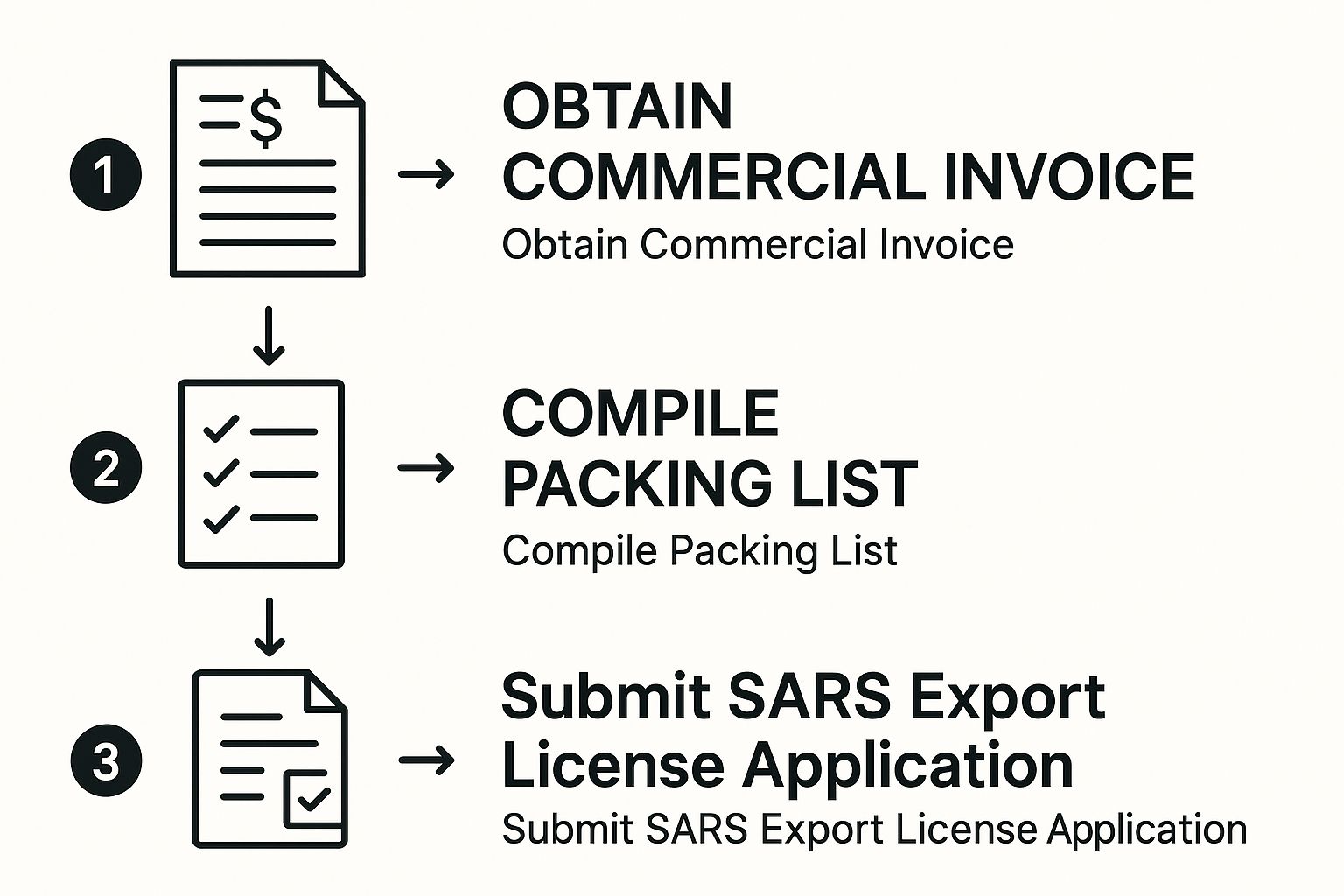
The infographic clearly illustrates the process: first, secure the commercial invoice detailing the goods. Then, compile a comprehensive packing list. Finally, you're ready to submit the complete SARS export license application.
Handling Queries and Maintaining Positive Relationships
During the review process, SARS might ask for additional information. This isn’t a red flag. Think of it as SARS double-checking the details to get a complete understanding. Respond promptly and professionally to their queries, providing all requested documents in a clear, organized format. This demonstrates respect for their procedures and your commitment to compliance.
This screenshot shows the SARS homepage, your access point to vital information and online services like eFiling. The website is your primary resource for staying up-to-date on regulations and utilizing the tools you need for a seamless export experience.
Cultivating a positive relationship with SARS officials is invaluable. This isn't about getting preferential treatment but about building mutual respect and open communication. Polite and professional interactions can significantly contribute to a smoother, more efficient application process.
Follow-Up and Warning Signs
Strategic follow-up is about keeping your application progressing without being overly insistent. Think of it as a gentle nudge, a polite reminder that your application is pending. A brief, professional email or a quick call can sometimes be all it takes.
There are warning signs that your application might be encountering obstacles. Extended periods without hearing from SARS, repeated requests for the same information, or inconsistent communication can all point to potential issues. Recognizing these early allows you to address them proactively and prevent your application from stalling. A successful SARS export license application boils down to careful planning, transparent communication, and a respectful approach. It’s about knowing the rules of the road and driving strategically toward your destination: a smoothly approved export license.
Cracking The Code On Fees, Timelines, and Speed Factors
In the export world, time truly is money. Knowing how quickly (or slowly) your SARS export license will be processed can be the deciding factor in landing that important deal. This section breaks down the costs involved with different license types and, even more importantly, reveals the secrets to getting your license approved faster.
Decoding the Fee Structure
Think of SARS export licenses like airline tickets: different classes have different prices. Exporting everyday goods might only require a small fee, while shipping restricted items could cost significantly more. Just as you'd budget for a flight, planning for these license fees is essential for maintaining a healthy business budget.
To help you prepare, we'll cover a detailed breakdown of the fee structure later on. This careful financial planning is crucial for South African businesses navigating the world of international trade. For example, recent trade data reveals impressive changes in export values. The Skilpadshek border post experienced a jump from R6.3 billion in exports in 2020 to R35.3 billion in 2021, a remarkable 34% increase. You can delve deeper into South African trade statistics here.
Unveiling the Hidden Speed Factors
Beyond the basic fees, there are several hidden factors that can drastically impact processing times. Imagine trying to navigate rush hour traffic: knowing the shortcuts and avoiding congested routes can save you valuable time. Similarly, understanding how SARS operates can help expedite your license approval.
What you're exporting plays a big role. Common items like textiles are usually processed much faster than regulated goods like certain minerals or technology, which require extra scrutiny. Think of it like sending a postcard versus a valuable package – the package needs more careful handling and inspection.
Another key factor is seasonal variation. Just like postal services get overloaded during the holidays, SARS experiences peak times that can lead to delays. Smart exporters anticipate these busy periods and time their applications accordingly, potentially saving weeks in the approval process.
Expedited Processing: Worth the Cost?
SARS does offer faster processing for urgent situations, but it comes at an additional cost. So, is it worth the extra expense? In some cases, absolutely. If a vital shipment is at risk and the costs of delay outweigh the rush fee, expedited processing is a smart investment. However, for routine exports, the standard processing timeframe is usually sufficient, especially if you've optimized your application.
To give you a clearer picture of the costs and processing times, let's look at the following table:
SARS Export License Processing Times and Fees
Breakdown of fees and expected processing times for different export license categories
| License Type | Standard Fee (ZAR) | Rush Fee (ZAR) | Standard Processing | Expedited Processing |
|---|---|---|---|---|
| General Goods | 250 | 500 | 5-7 Business Days | 2-3 Business Days |
| Restricted Goods | 500 | 1000 | 10-14 Business Days | 5-7 Business Days |
| Precious Metals | 750 | 1500 | 14-21 Business Days | 7-10 Business Days |
Please note: These figures are for illustrative purposes. For the most up-to-date fee schedule, please consult the official SARS website.
As you can see, the fees and processing times vary depending on what you're exporting. Understanding these differences can help you budget and plan your export strategy effectively.
The Power of Proactive Communication
Keeping the lines of communication open with SARS can also make a difference. While you can't force a quicker approval, building a good relationship by responding to inquiries promptly and providing clear information can help things run smoothly. It's about establishing trust and demonstrating that you're a reliable exporter.
This isn't about taking shortcuts; it's about making the process as efficient as possible for everyone. By understanding these hidden speed factors and proactively communicating with SARS, you can transform the export license process from a potential hurdle into a smooth path to export success.
Sidestepping The Traps That Derail Export Dreams
Every successful exporter has a few war stories about applications gone sideways. These setbacks are frustrating, but they often follow predictable patterns. Understanding these common pitfalls can greatly improve your chances of a smooth SARS export license approval. This isn't about focusing on the negative – it's about equipping you to navigate the process confidently.
Common Pitfalls and How to Avoid Them
One common mistake is incomplete documentation. Imagine arriving at a critical presentation only to realize you left half your slides at home. Submitting an incomplete application to SARS is similar – it guarantees delays. Double-check every document for accuracy and completeness. A simple checklist can be a lifesaver.
Another trap is misunderstanding the requirements for your specific goods. Different products, different rules. Exporting handcrafted jewelry isn't the same as exporting industrial machinery. Researching the specific regulations for your goods beforehand can prevent costly surprises later.
Miscommunication with SARS is another potential problem. Think of it like a game of telephone – misinterpretations can escalate quickly. Maintain clear, concise communication with SARS officials, confirming important details and responding promptly to their requests. Building a positive working relationship built on respect and responsiveness can smooth the entire application process.
Recovering From Mistakes
Even with the best preparation, mistakes can still happen. The key is to address them quickly and professionally. If you realize you've submitted incorrect information, contact SARS immediately. Explain the error and provide the correct documentation. Honest and proactive communication can often minimize the damage.
Some errors, unfortunately, are harder to fix. For example, significantly misrepresenting the value of your goods can have serious repercussions. In these situations, transparency and cooperation with SARS are essential. While it might mean starting over, addressing the issue directly demonstrates integrity and can help you avoid harsher penalties.
Communication is Key
Throughout the process, effective communication is your greatest ally. Think of SARS not as an opponent, but as a partner in ensuring compliant exports. Building a professional relationship founded on clear communication and mutual respect can make all the difference.
This isn't about gaming the system; it's about understanding it and working effectively within its framework. By avoiding these common pitfalls and maintaining open communication with SARS, you can navigate the export licensing process with greater confidence, turning potential setbacks into learning opportunities. And for simplifying your international payments once your license is secured, consider solutions like Zaro, a fintech platform designed to streamline cross-border transactions for South African businesses.
Advanced Strategies For Export Licensing Excellence
The difference between exporters who consistently nail SARS export licenses and those who constantly struggle often comes down to two things: smart systems and solid relationships. This section explores the advanced techniques experienced exporters use to make licensing painless, turning a potential compliance headache into a real competitive edge.
Building Bridges, Not Walls: Relationships with SARS
Imagine dealing with SARS not as a regulatory hurdle, but as a collaborative process. Building a good relationship with SARS officials isn't about getting special favors. It's about mutual respect and understanding. Just like a good relationship with your bank can smooth out financial transactions, a positive relationship with SARS can make licensing much more efficient.
This starts with being professional. Respond to questions quickly, provide accurate and complete information, and always be respectful. Treat SARS officials as partners in ensuring compliant exports, not as roadblocks. This builds trust and makes for smoother interactions.
Internal Systems: Prevention Over Cure
Experienced exporters know the value of robust internal systems. Think of it like a well-maintained car: regular maintenance prevents breakdowns. A good system for managing export documents, tracking applications, and keeping up with regulatory changes can stop problems before they even start.
Using the right technology is key. Software solutions for record-keeping, automated deadline reminders, and tools that track regulatory updates can streamline your operations and reduce the risk of human error, saving you time and money down the line.
Proactive Communication: Staying Ahead of the Curve
Good communication isn't just about answering SARS’s questions; it's about anticipating them. Provide detailed information upfront, addressing potential questions before they're even asked. This demonstrates your organization and thoroughness, which can speed up the application process.
Keeping up with regulatory changes is just as important. Subscribe to SARS updates, attend industry webinars, and connect with trade associations. By proactively understanding the regulatory landscape, you can adapt quickly and stay compliant.
Scaling for Growth: Maintaining Licensing Efficiency
As your exports grow, so will your licensing needs. Build systems that can scale with your business, ensuring your licensing process remains efficient even with higher volumes. This might mean automating documentation, training dedicated licensing staff, or working with a customs broker.
Staying Ahead of the Game: Regulatory Foresight
The best exporters don't just react to regulatory changes; they anticipate them. They understand the bigger picture of international trade and foresee potential shifts in regulations. This allows them to prepare in advance, minimizing disruptions and staying competitive.
Connecting with industry experts, consultants, and legal professionals can give you valuable insights into upcoming changes. This allows you to adjust your strategies and keep your business compliant and competitive.
Turn your SARS export license process from a recurring challenge into a strategic asset. By using these advanced strategies, you can streamline operations, build strong relationships with SARS, and set your business up for long-term export success. Once your export license is secured and you’re ready to manage international payments, consider using Zaro, a fintech platform designed to simplify cross-border transactions for South African businesses.